Engineering&Simulation Page 11
PointCab Origins is a user-friendly point cloud processing software developed by PointCab Software GmbH (part of Laserscanning Europe GmbH), designed for surveyors, architects, and engineers working with 3D laser scan data. It streamlines workflows for creating 2D floor plans, elevations, sections, and 3D models from massive point cloud datasets, supporting imports from major scanners like Leica, Faro, Trimble, and Z+F. The software excels in automated extraction tools (e.g., walls, ceilings, pipes) and seamless exports to CAD/BIM platforms such as AutoCAD, Revit, ArchiCAD, and SketchUp. It’s praised for its intuitive interface, reducing processing time from hours to minutes, and is ideal for as-built documentation, BIM modeling, and construction verification. Version 4.2, released in April 2024 as part of the Origins 4.x...
Overview of RoboDK 5.9 RoboDK is a comprehensive software suite for industrial robot simulation, offline programming, and optimization, developed by RoboDK Inc. It supports over 1,000 robot models from more than 80 manufacturers (e.g., ABB, Fanuc, KUKA, Universal Robots) and enables users to simulate complex tasks like welding, machining, painting, and pick-and-place operations. The software bridges CAD/CAM workflows with robot controllers, allowing program generation in native robot languages without physical hardware. It’s widely used in manufacturing, research, and education for reducing programming time by up to 80% compared to teach pendants. Version 5.9, released around mid-2024, builds on the major 5.0 overhaul (2021) with incremental enhancements focused on API improvements, driver stability, and mobile compatibility. It maintains the core strengths...
Simcenter Madymo (formerly known as MADYMO) is a leading simulation software package developed for occupant safety analysis in the automotive, aerospace, and transportation industries. It specializes in modeling crash scenarios, restraint systems (e.g., seatbelts, airbags), and human body responses using a combination of multibody dynamics (MB), finite element (FE), and computational fluid dynamics (CFD) technologies. The software enables engineers to predict injury risks, optimize safety designs, and reduce the need for costly physical prototypes. It was originally developed by TNO (Netherlands Organization for Applied Scientific Research) and is now owned and distributed by Siemens Digital Industries Software under the Simcenter brand. Version 7.8, released in October 2019, represents a significant update focused on performance improvements and enhanced human body modeling....
SHIPFLOW 7.1 Hydrodynamics CFD Software SHIPFLOW is a leading computational fluid dynamics (CFD) suite developed by FLOWTECH International AB for ship hydrodynamics design, hull optimization, resistance prediction, propulsion analysis, and seakeeping (motions in waves). It’s optimized for naval architects, with automated grid generation, specialized solvers for hull geometries, and tools for full-scale simulations. Version 7.1 is a minor update within the SHIPFLOW 7 series, focusing on enhancements to accuracy, speed, and robustness—particularly in the MOTIONS module for wave simulations and RANS solver for high block coefficient ships. Key Features in SHIPFLOW 7.1: MOTIONS 7 Rework: Improved accuracy and speed for seakeeping simulations on ships, yachts, multi-hulls, semi-submersibles, and floating structures. Supports parametric roll predictions and automatic HTML reports. RANS Solver...
ESI BM-Stamp 2025 (Body Manufacturing-Stamp 2025.0) is a state-of-the-art stamping simulation software developed by ESI Group, a leader in virtual prototyping and simulation solutions. Launched on February 27, 2025, it is tailored for the automotive industry to predict and optimize sheet metal forming processes, enabling manufacturers to validate designs virtually, minimize physical prototypes, and achieve higher precision in production. Built on over 25 years of proven PAM-STAMP solver technology, BM-Stamp 2025 simplifies complex simulations for engineers without deep finite element analysis (FEA) or meshing expertise, focusing on key processes like line/transfer die, hot forming, and progressive die operations. It addresses challenges with advanced materials such as high-strength steel and aluminum, helping reduce costs, production time, and defects. Key Features Intuitive...
Plexon Offline Sorter (OFS) v4 is a leading offline spike sorting software developed by Plexon Inc. for electrophysiology research. It is widely used in neuroscience to process and classify extracellular neural recordings, enabling researchers to isolate individual neuron spikes from multi-channel data. With over 1,700 peer-reviewed publications citing its use, OFS v4 is a trusted tool for tasks like waveform analysis, cluster separation, and quality validation in studies of neural coding, brain activity, and animal behavior. It supports a broad range of file formats from various acquisition systems, making it versatile for post-hoc analysis. Key Features Spike Sorting Algorithms: Includes template matching, principal component analysis (PCA), and advanced methods like scan sorting for automatic cluster detection. Users can manually refine...
Visual3D v6 Professional is a specialized software suite developed by C-Motion (now part of HAS Motion) for advanced 3D biomechanics analysis and modeling. It is designed primarily for researchers, clinicians, and engineers working in fields like sports science, rehabilitation, orthopedics, and human movement studies. The software processes motion capture data to quantify and visualize human movement, enabling users to build biomechanical models, analyze kinematics and kinetics, and generate reports. It supports integration with various hardware systems, making it a versatile tool for gait analysis, joint mechanics, and musculoskeletal simulations. Key Features Data Import and Compatibility: Reads industry-standard C3D files from any motion capture system (e.g., Vicon, Qualisys, or Motion Analysis). It also handles real-time streaming data for live processing. Modeling...
Overview of Living Image 4.5 Living Image is a powerful image acquisition and analysis software developed by PerkinElmer (now Revvity) for their IVIS® in vivo imaging systems. It supports preclinical research in oncology, infectious diseases, drug development, and neuroscience by enabling 2D and 3D visualization, quantification, and analysis of bioluminescent and fluorescent signals in live animals. The software processes data from optical, CT, and multi-modality imaging, offering tools for ROI drawing, spectral unmixing, tomographic reconstruction (DLIT and FLIT), and co-registration with anatomical images. It integrates with IVIS Spectrum, Lumina, and other systems, providing workflow automation, customizable reporting, and export options to formats like TIFF, AVI, and Excel. Living Image is widely used in academic and pharmaceutical labs for non-invasive, longitudinal...
IBM Rational DOORS (now known as IBM Engineering Requirements Management DOORS) is a comprehensive requirements management platform designed for complex systems engineering projects in industries like aerospace, automotive, defense, and medical devices. It provides robust tools for capturing, tracing, analyzing, and managing requirements throughout the product lifecycle, ensuring compliance, reducing risks, and facilitating collaboration among distributed teams. Version 9.6, released in 2014, introduced enhancements in usability, integration, and performance, making it a staple for regulated environments requiring traceability and auditability. It supports the DOORS eXtension Language (DXL) for custom scripting and integrates with tools like IBM Rational Team Concert, Rhapsody, and third-party applications via OSLC standards. Key Features of DOORS 9.6 Requirements Capture and Traceability: Hierarchical modules for organizing requirements...

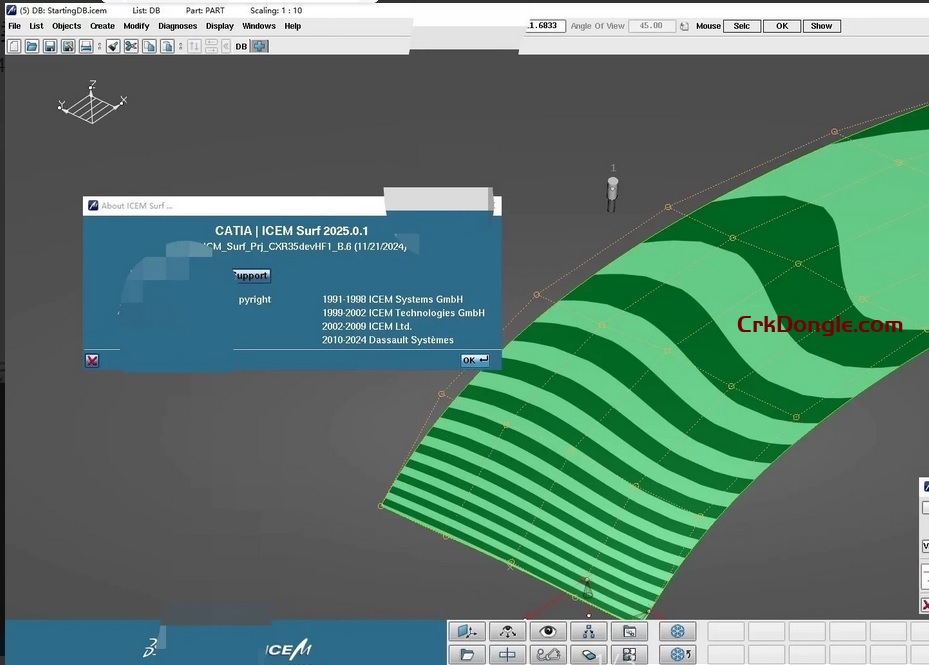
ICEM Surf is a leading computer-aided industrial design (CAID) software developed by Dassault Systèmes, specializing in the creation of high-quality Class-A surfaces using Bézier surface modeling techniques. Originally developed by Volkswagen in the 1980s as VW Surf for advanced 3D surface modeling in vehicle body development, it evolved into a commercial tool trusted by major OEMs in automotive, aerospace, and consumer goods industries for explicit geometry modeling, analysis, and visualization of complex free-form CAD surfaces. ICEM Surf integrates seamlessly with CATIA and the 3DEXPERIENCE platform, supporting the ICEMDB file format for efficient data exchange and collaborative workflows. The 2024 release, including the 2024.2 update, emphasizes enhanced performance in curve and surface manipulation, real-time visualization, and quality control to achieve precise...
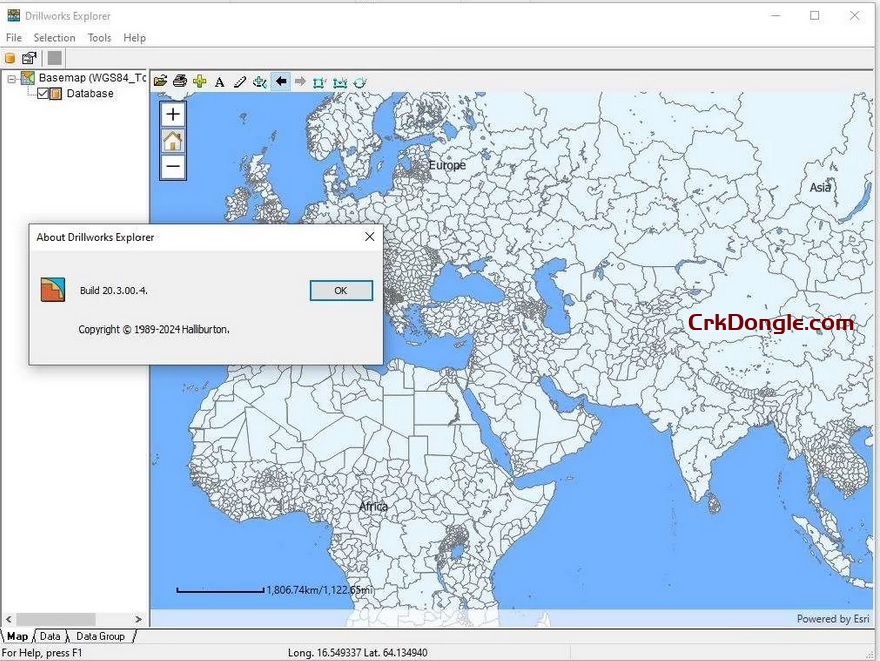
Landmark Drillworks is a geomechanical software suite developed by Halliburton Landmark, designed for petroleum engineers, geologists, and drilling teams. It enables analysis of subsurface conditions, pore pressure prediction, geomechanical modeling, and well planning to mitigate risks like drilling hazards, optimize mud and casing programs, and reduce costs in complex reservoirs. The software integrates with other Halliburton tools like OpenWorks and DecisionSpace 365 for enhanced data management and real-time decision-making. Key Features of Drillworks Pore Pressure and Fracture Gradient Analysis: Uses seismic, well log, and geologic data to build geopressure models, helping predict and prevent issues like kicks, stuck pipes, or lost circulation. 3D Visualization and Modeling: Supports importing horizons, faults, and surfaces for holistic 3D views of wellbore data (e.g.,...
OpenFlows WorkSuite Overview Based on the query “OpenFlow Suite 2024.1,” a suite of hydraulics and hydrology modeling software developed by Bentley Systems. This is a professional engineering toolset for water distribution, wastewater, and stormwater systems, with compatibility and updates aligning with 2024 standards (e.g., support for AutoCAD 2024 and ArcGIS Pro 3.1). It’s widely used for infrastructure design, analysis, and operations in civil engineering and utilities. OpenFlows WorkSuite integrates multiple modules into a unified platform, running as a standalone application or within CAD/GIS environments like AutoCAD, MicroStation, ArcGIS, and more. It’s licensed in tiers based on pipe count (1,000, 5,000, or unlimited) and requires Microsoft Windows 10/11 or Server 2019/2022. Key Modules in OpenFlows WorkSuite Module Description Key Features OpenFlows...
Meteodyn WT 6.9 is a computational fluid dynamics (CFD) software developed by Meteodyn, designed for wind resource assessment and wind farm development. It simulates wind flow, evaluates annual energy production (AEP), and optimizes turbine layouts for both onshore and offshore wind projects. Tailored for complex terrains (e.g., mountainous or forested areas), it employs the K-L turbulence model to solve Navier-Stokes equations, delivering high-accuracy simulations. As part of the Meteodyn Universe suite (up to version 1.9 or later as of September 2025), version 6.9 introduces enhanced stability methods, multi-mast tools, and wake effect modeling, improving efficiency and precision in wind farm design. It supports Windows 8 through Windows 10/11. Key Features Stability Method: Integrates atmospheric boundary layer thermal stability modeling, incorporating...
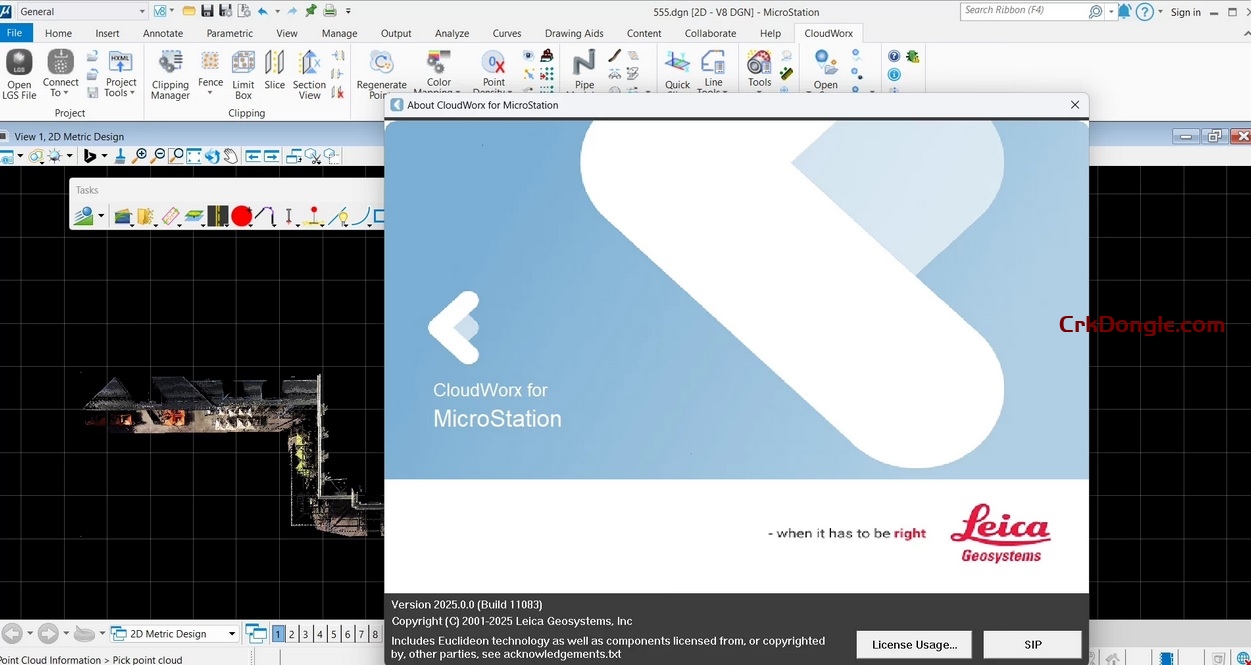
Leica CloudWorx 2025 for Revit Features Introduction Leica CloudWorx 2025 for Revit is a powerful plugin developed by Leica Geosystems, designed to integrate point cloud data captured from laser scanners directly into Autodesk Revit for Building Information Modeling (BIM) workflows. It enables precise modeling of as-built conditions, supporting retrofit design, construction verification, facility operations, and lifecycle asset management. Compatible with Revit 2021-2025, this version supports the .LGSx file format and delivers enhanced visualization, automation tools, and seamless integration with Reality Cloud Studio. Released as version 2025.0.0, it emphasizes improved multi-platform collaboration, performance, and stability for industries like architecture, engineering, and construction (AEC). Key Features Reality Cloud Studio Integration: Direct connection to Reality Cloud Studio (RCS) from the project panel, enabling...
DYNAFORM 7.2.2 is the latest build (e.g., Build 2024.12.03) of ETA’s sheet metal forming simulation software based on the LS-DYNA solver, tailored for die design and evaluation. It covers the entire die system process, from blank engineering to structural analysis. Compared to version 7.1, it significantly improves speed, precision, and efficiency, introducing innovations like hot forming and drop testing. Ideal for automotive, aerospace, and manufacturing industries, this version enhances the Sigform solver with adaptive meshing, multi-stage stamping, gravity loading, springback compensation, and press tonnage prediction, helping users reduce production time, minimize errors, and boost profitability. Key Modules and Features Blank Size Engineering (BSE): Estimates blank size with support for 1-up, 2-up, mirrored, and multiple blank nesting configurations to maximize material...
Overview of Paradigm Geolog 2024 Paradigm Geolog 2024 (version 2024, part of the Emerson Paradigm suite) is a leading petrophysical and formation evaluation software for the upstream oil and gas sector. Developed by Paradigm (now under Emerson’s Subsurface Science and Engineering division), it enables geoscientists, petrophysicists, and engineers to perform advanced log analysis, reservoir characterization, and well data interpretation. The software supports multi-well workflows, integrates with seismic data, and provides tools for probabilistic modeling and geomechanics. As of September 2025, it’s integrated into Emerson’s broader E&P portfolio, emphasizing automation, data interoperability (e.g., with OSDU), and AI-assisted insights for faster, more accurate subsurface evaluations. Paradigm Geolog has been an industry staple since the 1990s, with 90% adoption among top oil producers...
 Engineering software Download