Engineering&Simulation Page 18
PSS/E (Power System Simulator for Engineering), developed and maintained by Siemens Energy, is a professional-grade power system simulation and analysis tool widely used in power system planning, optimization, operational analysis, and dynamic simulation. As one of the industry-leading software solutions, PSSE features comprehensive functional modules that empower power engineers and researchers to simulate complex power systems, including steady-state, dynamic, and transient behavior analysis. The main functions include: Trend computing and optimization: analysis of power distribution in the grid. Stability analysis: stability of dynamic simulation system. Transient simulation: evaluate the effects of short circuit faults and disturbances on the system. Multi-technology expansion: support grid connection optimization, new energy design and compatibility analysis. The modular design of PSSE allows users to select...
REFLEXW 10.5 is designed for processing, interpreting, and analyzing seismic, ground-penetrating radar, and ultrasonic data formats. The software provides the SD01 processing tool for handling waveforms ranging from ground-penetrating radar (GPR) to seismic reflections, refraction data, and ultrasonic signals. It supports diverse data formats and geometries, allowing direct integration of GPS data into imported sequences. The system offers multiple visualization modes including point plotting, oscillation patterns, combined modes, contour views, zooming and panning, rotation and flipping displays, as well as multi-synthetic plotting. As a fully interactive platform, REFLEXW enables complete control over all processing and interpretation steps. The software comprehensively covers all possibilities of wave analysis data processing.
Maptek Vulcan 2025.1 is an advanced 3D geological modeling and mine planning software that stands out in the mining industry for its comprehensive functionality, data processing capabilities, and user-centric enhancements. Tailored to support the entire mining lifecycle, it empowers professionals to turn complex data into actionable insights, precise models, and efficient operational plans. Core Capabilities 3D Geological Modeling Excellence: It offers robust tools to construct detailed geological models, accurately capturing ore body geometries, structural features like faults and veins, and lithological variations. The software supports diverse data inputs, including drillhole data, geophysical data, and surface observations, ensuring models reflect real-world geological complexities. Integrated Mine Design Tools: Covering both open-pit and underground mining, it provides a full suite for mine design....
Polarion ALM is a browser-based application life cycle management (ALM) solution developed by Siemens for software and systems engineering, supporting the whole process collaboration of requirements management, test management, project management, etc. The following are its core functions and features: Core functions Integrated platform Integrate requirements management, coding, testing, and release to provide end-to-end traceability 1. Agile and hybrid development support Built-in agile/fallow template to support flexible project management 2. Industry compliance Complies with automotive (ISO 26262, ASPICE), aerospace and other industry development standards 3. Unique advantages Live Document online collaboration : Supports real-time editing and version control of structured specification documents and integration with PLM : Enables full life cycle tracking of hardware and firmware...

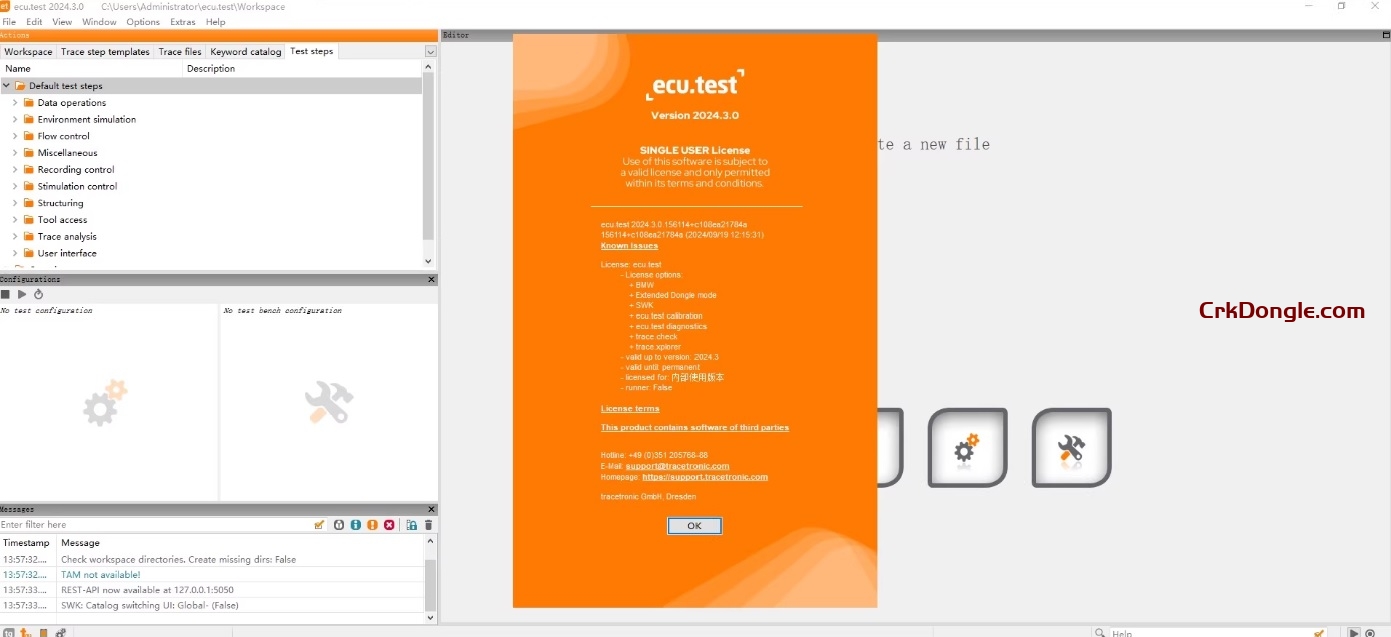
ECU-TEST is an embedded system test and verification tool developed by TraceTronic, Germany. Since its release in 2003, it has become a standard tool for automotive ECU development and has been extended to heavy machinery and industrial automation 2. Its core functions include the standardization, creation, execution and automated analysis of test cases, supporting the whole process of verification from model in ring (MIL) to real car testing Core characteristics Multiple test environment support It covers MIL/SIL/HIL and real vehicle testing, and reduces the operation threshold through graphical programming, so that test cases can be designed without in-depth programming skills Modular architecture Project management and editing : integration of test case sequences and parameterized configurations...
IPG Automotive’s CarMaker software, a world-class simulation testing solution for the passenger vehicle market, establishes a comprehensive vehicle simulation and testing environment spanning from concept development to component integration testing. Furthermore, CarMaker can be flexibly adapted for various testing phases including MIL/SIL (Model In-Loop/Silicon In-Loop), HIL (Hardware In-Loop), DIL (Driver In-Loop), and VIL (Vehicle In-Loop) systems, effectively helping engineers reduce time and cost investments. IPG Automotive’s CarMaker software, a world-class simulation testing solution for the passenger vehicle market, establishes a comprehensive vehicle simulation and testing environment spanning from concept development to component integration testing. Furthermore, CarMaker can be flexibly adapted for various testing phases including MIL/SIL (Model In-Loop/Silicon In-Loop), HIL (Hardware In-Loop), DIL (Driver In-Loop), and VIL (Vehicle In-Loop) systems,...
Windographer is a professional wind resource assessment software, mainly used to process and analyze wind speed, wind direction and other data, to help optimize the design of wind farms. The following are its core functions and features: data-handling capacity Supports the import of various data formats (such as RWD, NDF, SoDAR, LiDAR, etc.), automatically identifies key data columns such as wind speed, temperature, pressure, etc., and supports the adjustment of data calibration constants. Data analysis tools It provides wind rose graph generation, time series analysis, power curve calculation and other functions, and can generate wind energy density assessment report. Data visualization Supports visual presentation of data, including visualization of raw data and processed data (such as air density,...
QuantumATK X-2025.06: Feature Overview QuantumATK X-2025.06 is a leading platform for atomic-scale modeling, integrating density functional theory (DFT), semi-empirical tight binding, classical force fields, and machine-learned force fields (ML-FFs). It accelerates research and development in semiconductors, materials science, and nanotechnology by enabling large-scale, realistic simulations with enhanced performance. Key Features of QuantumATK X-2025.06 Advanced Simulation Engines: Supports DFT with linear combination of atomic orbitals (LCAO) and plane-wave basis sets, semi-empirical models, and classical potentials for versatile material simulations. Non-Equilibrium Green’s Function (NEGF) module for simulating nanoscale devices and interfaces, including support for non-zero bias, electrostatic gates, and dielectrics. Enables modeling of complex systems like high-k metal gate stacks and 2D material-based field-effect transistors (FETs). Performance Improvements: Achieves 10x+ speedup in...
RiSCAN PRO 2.16 is a comprehensive software for managing terrestrial laser scanning projects, offering tools for data acquisition, processing, visualization, and analysis. It is designed to optimize workflows for producing accurate and refined TLS point cloud data, integrating seamlessly with RIEGL’s laser scanners. Key Features of RiSCAN PRO 2.16 Data Acquisition and Management: Organizes all project data (scans, images, GNSS data, control points, and reflector coordinates) within a structured project framework. Supports real-time data acquisition from RIEGL terrestrial laser scanners, ensuring precise capture of 3D point clouds. Links data via transformation matrices to align multiple scan positions into a common reference system. Point Cloud Optimization: Automatic Registration: Aligns multiple scan positions using automated algorithms to minimize manual adjustments. Multi-Station Adjustment:...
SolarWinds® Database Performance Analyzer (DPA) supports a wide range of proprietary databases to give a holistic picture of performance. SolarWinds® Database Performance Analyzer (DPA) is a comprehensive database performance monitoring and analysis tool, designed to provide a global view of database performance through the integration of multi-dimensional metrics and intelligent analysis. Its core functions and advantages include: Cross-platform performance monitoring Supports multiple database management systems (such as Oracle, SQL Server, MySQL, DB2, Sybase, etc.), covering local, virtualized and cloud environments, and enables unified management through a single console. Provide high granularity data collection (with a resolution of per second), real-time tracking of thousands of metrics, and display historical and current performance trends through a visual interface. Response Time Analysis and Bottleneck Location By using the response time analysis method, SQL query performance issues can be accurately identified, including...
ZEN is the universal user interface you will see on every imaging system from ZEISS. For simple and routine works, ZEN leads you straight to result. For complex research experiments, ZEN offers the flexibility to design multi-dimensional workflows the way you wanted. No matter what microscopy task you have, you will find intuitive tools and modules to assist you: Acquire images using smart automation Process images with scientifically proven algorithms Visualize big data by GPU powered 3D engine Analyze images via Machine Learning-based tools Correlate between light and electron microscopes
The Meta Imaging Series MetaMorph 7.10 is a microscopy automation and image analysis software developed by Molecular Devices, designed for advanced imaging applications in biological research. It automates acquisition, device control, and analysis of images from various fluorescent microscopes, integrating diverse hardware into a single custom workstation. Below is a detailed overview based on available information: Key Features of MetaMorph 7.10: Automation and Device Control: Supports a wide range of commercially available microscopes, cameras, laser launches, TIRF optics, and other peripherals. It enables seamless integration and control for complex acquisition protocols, including multidimensional imaging (e.g., stacks of sequential images, multiple Z-sections, wavelengths, time points, and positions). Image Processing and Analysis: Offers a comprehensive toolbox with features like background subtraction, shading...
NONMEM V7.5 + PIRANA V3.0 Software Suite. NONMEM (Nonlinear Mixed Effects Modeling) is a software program used for pharmacokinetic and population pharmacokinetic studies, primarily for drug metabolism and efficacy analysis. PIRANA is a flexible modeling workbench that provides a GUI interface for tools such as NONMEM, PsN, and Xpose. It is specifically designed for population pharmacokinetic/pharmacodynamic modeling, helping modelers efficiently manage the model creation and execution process. It includes a rich model library and analysis tools, making it suitable for use in pharmaceutical research and development.
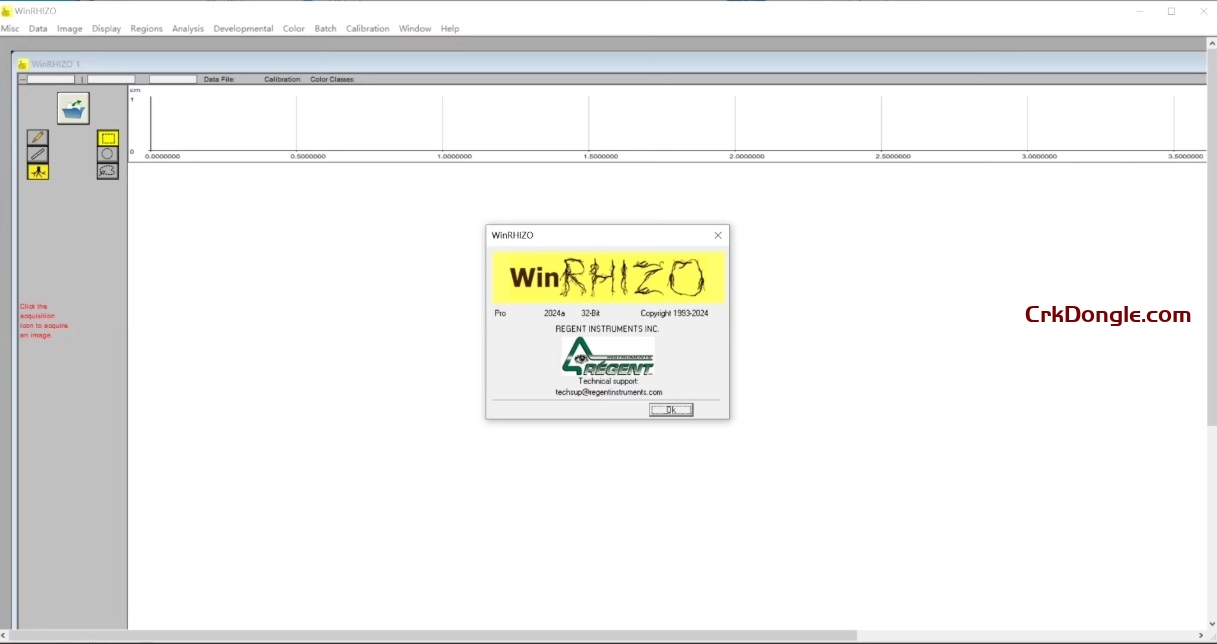
WinRHIZO pro 2024 is a professional root analysis system designed for post-root washing analysis , capable of analyzing root length, diameter, area, volume, and root tip counts. It offers powerful functionality with a user-friendly interface and is widely used in studies of root morphology and structure. The instrument is equipped with a specialized dual-light source illumination system, effectively eliminating the effects of shadows and uneven lighting, thereby providing high-resolution color and black-and-white images. It supports reading images in TIFF and JPEG standard formats. Additionally, it employs non-statistical methods to measure and calculate parameters such as the length of overlapping root sections, significantly enhancing the accuracy of analysis results. Additionally, the professional version of the software enables more complex root color...
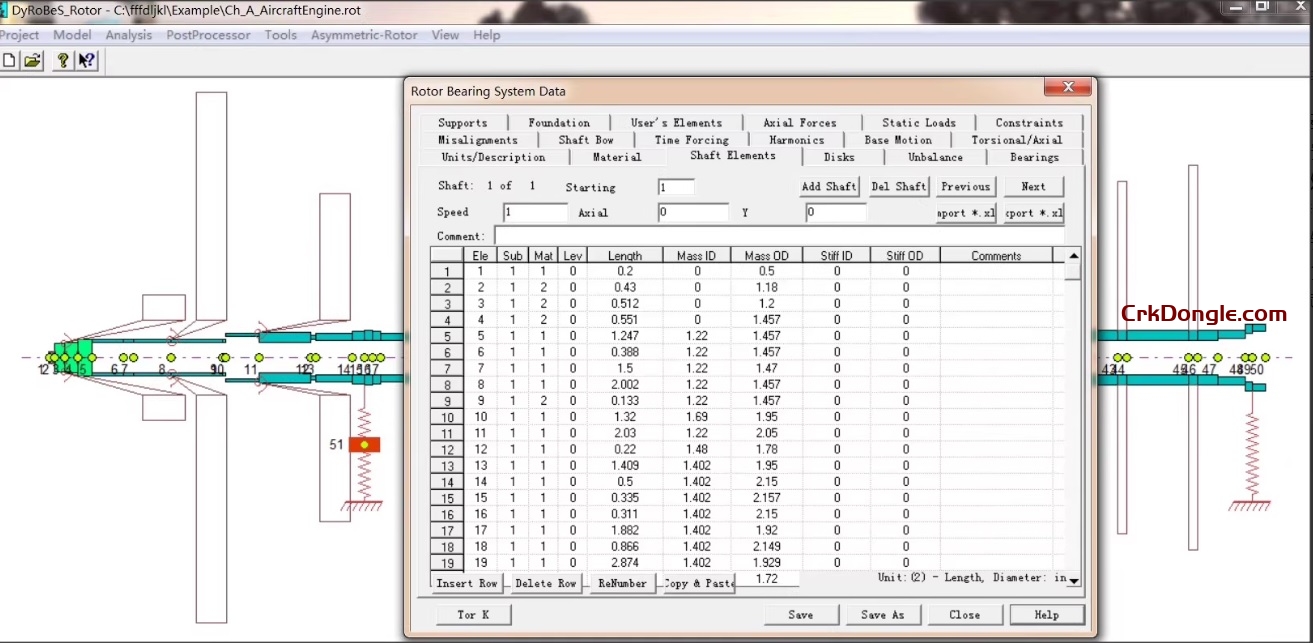
Dyrobes is comprised of two major programs and four optional programs. All programs are integrated. The two major programs are Rotor dynamics (Rotor) and Bearing Performance (BePerf). Non-linear, time transient motion of turbocharger. Together, the two programs provide engineers with a single comprehensive tool that can analyze a rotor-bearing system without the expense of long trials. Dyrobes Rotor is capable of linear and non-linear analyses of free and forced vibrations (lateral, torsional, and axial) as well as static deflections of multi-shaft and multi-branch flexible rotor-bearing-support systems. More than ten different types of bearings, dampers and seals are built in. FEA programming allows for multi-shaft designs and modeling of bearing housings. The wide range of bearing configurations which can be analyzed...
Pandat 2025 _This database contains the structural, thermodynamic, elastic, electronic, magnetic, and optical properties of approximately 4,000 two-dimensional (2D) materials distributed across more than 40 different crystal structures. The types of materials included in the database are: MXY Janus, MXene, TMDC-H, TMDC-T, TMDC-alloy, Xane, Xene, etc. The database contains over 200,000 first-principles calculation results for inorganic crystal materials, including crystal structures, electronic structures, thermodynamic stability, and the dielectric and mechanical properties of materials, which can be used for the design of functional materials, alloys, and energy materials.