Engineering&Simulation Page 24
Ansys RedHawk-SC in 2024 (specifically the 2024 R1 and R2 releases) continues to be a leading solution for power integrity and reliability signoff for integrated circuits (ICs), particularly for advanced nodes down to 3nm. Below is a concise overview based on available information, focusing on its features, updates, and relevance in 2024: Key Features of Ansys RedHawk-SC Industry Standard for Power Integrity: RedHawk-SC is recognized as the gold standard for voltage drop and electromigration multiphysics signoff for digital designs. It ensures robust, low-power designs without performance loss by detecting and correcting dynamic voltage drop (DvD) issues. Cloud-Native Architecture: Built on the SeaScape platform, it leverages elastic compute scalability, enabling full-chip analysis with thousands of CPU cores and modest memory requirements....
EVS (Earth Volumetric Studio) is a 3D modeling and analysis software designed for the field of Earth sciences, enabling true 3D modeling, analysis, and visualization of geological body data; it supports data interoperability with software such as ArcGIS, Revit, and Civil 3D; and it enables the creation of true 3D model animations for presentation. The models created by EVS accurately reflect the morphological characteristics of geological structures, structural relationships, and the patterns of internal property changes within geological bodies; Models can be sliced in any form for multi-angle observation; it has excellent handling capabilities for sharp terminations, lenses, faults, and caves. EVS versions 2025/2024 were recently officially released. The new versions have upgraded or optimized software functionality, algorithm principles, and...

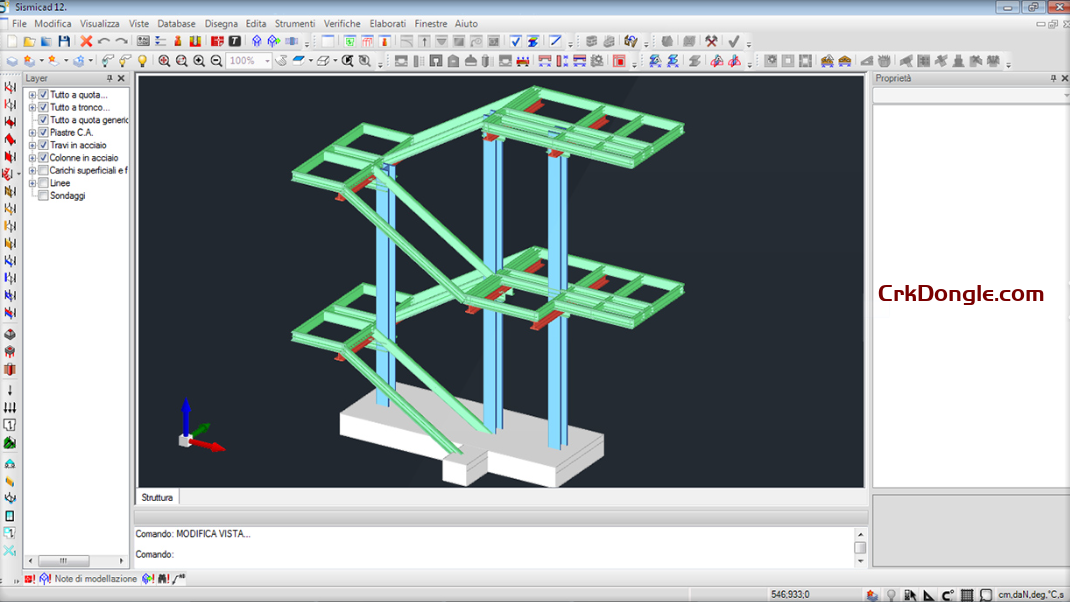
Sismicad 13 is a structural analysis software developed by Concrete S.r.l., featuring a 3D interface for designing and verifying structures made of reinforced concrete, masonry, steel, timber, seismic isolators, and dissipators. It supports finite element modeling with an integrated solver, compliance with Italian and Eurocode standards, and generates executive drawings, technical reports, and seismic risk assessments. Key features include: Material Versatility: Handles reinforced concrete, masonry (shell or equivalent frame modeling, linear/non-linear pushover analysis), steel (resistance and stability checks for welded/bolted joints), and timber (X-LAM, Platform-frame with non-linear constraints). Seismic Analysis: Calculates seismic risk indicators and classifications for new and existing buildings, including reinforcement verifications (e.g., FRP, GFRP, CAM). BIM Integration: Supports IFC, SAF file import/export, Autodesk Revit® add-in, and IDEA...
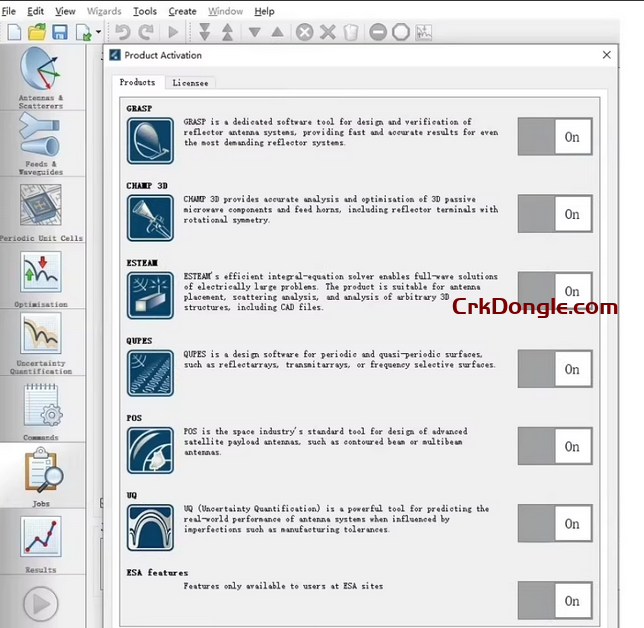
TICRA tools is organised as a commercial foundation, the TICRA Foundation. The TICRA Foundation supports the electro-technical engineering science community by distribution of grants. As examples, the TICRA Foundation has distributed grants to research projects and test equipment as well as travel grants for university students and staff. Improved Computational Performance: Users experience faster computations and quicker responses for pattern grid operations across all TICRA Tools products with the introduction of binary output files for pattern grids. Design Flexibility without External Tools: The new Boolean Scatterer class in GRASP, ESTEAM, CHAMP 3D, and QUPES allows for the creation of intricate geometries without relying on external CAD tools, offering enhanced design flexibility. Simplified Waveguide Definition: CHAMP 3D users benefit from a...
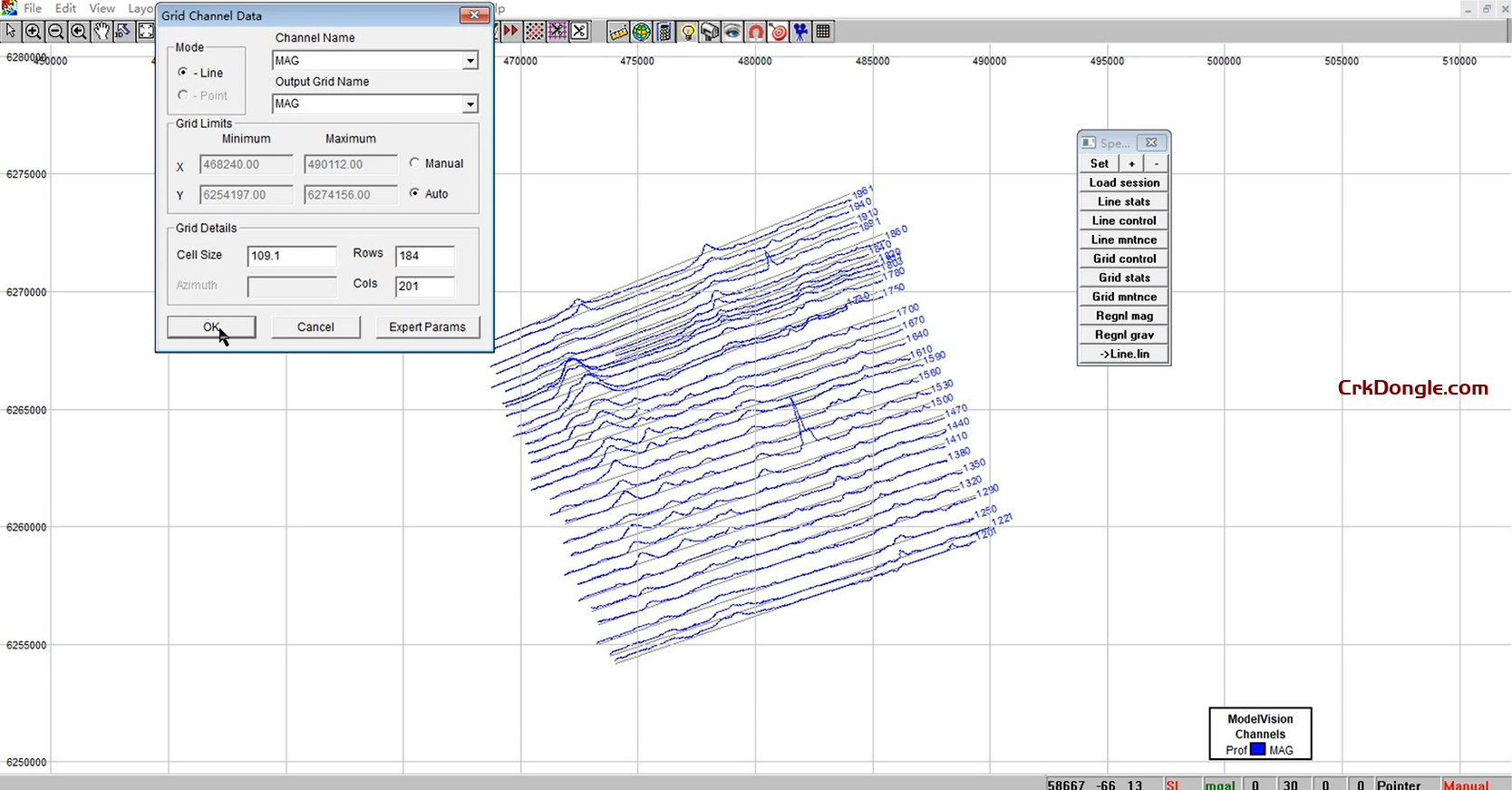
ModelVision 18, developed by Tensor Research, is an advanced 3D magnetic and gravity modeling software designed for geophysical and potential field exploration. It is widely used in mineral exploration, diamond exploration, petroleum exploration, environmental geophysics, engineering, unexploded ordnance (UXO), and underground hazard assessment. The software provides a comprehensive interpretation environment, enabling geophysicists to visualize, analyze, model, and invert potential field data with high precision. Below is a detailed overview based on available information. Key Features of ModelVision 18: 2D/3D Modeling: Supports both 2D and 3D modeling of magnetic and gravity data, allowing for detailed subsurface interpretation. 3D Geology Inversion: Uses advanced inversion techniques to derive geological structures from potential field data, including full tensor modeling for next-generation magnetometers. Mapping and...
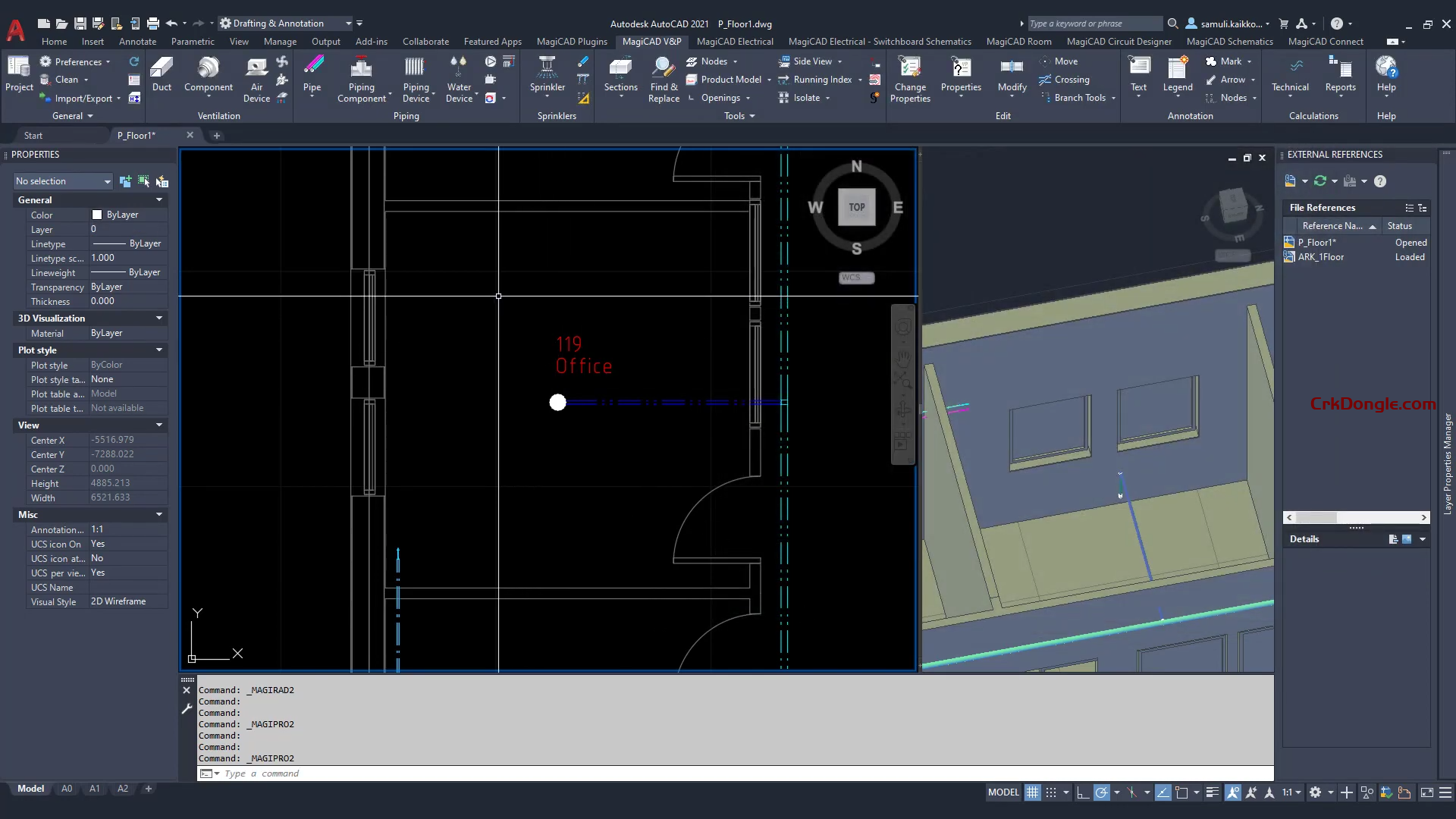
MagiCAD 2025 is a leading MEP (Mechanical, Electrical, and Plumbing) design software released by MagiCAD Group, compatible with Autodesk Revit (2023.1–2025), AutoCAD (2021–2025), and BricsCAD platforms. It enhances MEP design efficiency with new and improved features, leveraging Europe’s largest product model database, containing over 1,000,000 products from 300 manufacturers with accurate dimensions and technical data. The software supports localization for various country-specific standards and is used in over 80 countries. Key Features and Improvements: Dry Sprinkler System Calculations: Available across all platforms, enabling design for sprinkler systems in extreme temperature conditions (below freezing or above boiling points) by calculating accurate water delivery times based on factors like water source, dry valve, network design, gas pressure, and sprinkler head properties. Automatic...
RockWorks 2025 is the latest version of RockWare’s comprehensive geological software, widely used in the petroleum, environmental, geotechnical, and mining industries for surface and subsurface data visualization and analysis. It offers tools for creating 2D and 3D maps, logs, cross-sections, fence diagrams, solid models, and volume calculations, supporting data types like stratigraphy, lithology, geochemistry, geophysics, geotechnical measurements, fractures, and aquifer data. Key Features: Visualization: Generate contour maps, borehole logs, cross-sections, and 3D models. Output can be viewed in RockWorks’ 2D/3D viewers or exported to CAD, Google Earth, or GIS formats. Data Management: Supports Excel/ASCII imports and SQLite databases, with options for SQL-server support in Advanced editions. Analysis: Includes volumetric calculations, geostatistical modeling, and integration with GIS/CAD for enhanced workflows. New...
HighScore Plus The ideal tool for crystallographic analysis and more Whether you are interested in improved process control, or doing research and development, understanding your materials starts very often with understanding the powder diffraction pattern. After identification of all phases present in your sample with Malvern Panalytical’s HighScore, this all-in-one software suite with the Plus option continues to support you with your analysis. Whether your focus is on quantification with or without the Rietveld method, profile fitting, or pattern treatment; HighScore Plus is the solution and helps you performing your daily analyses. Comprehensive crystallographic analysis HighScore with the Plus option contains four classical indexing routines (Ito, Dicvol, Treor or McMaille). The unit cell refinement includes zero offset or sample displacement....
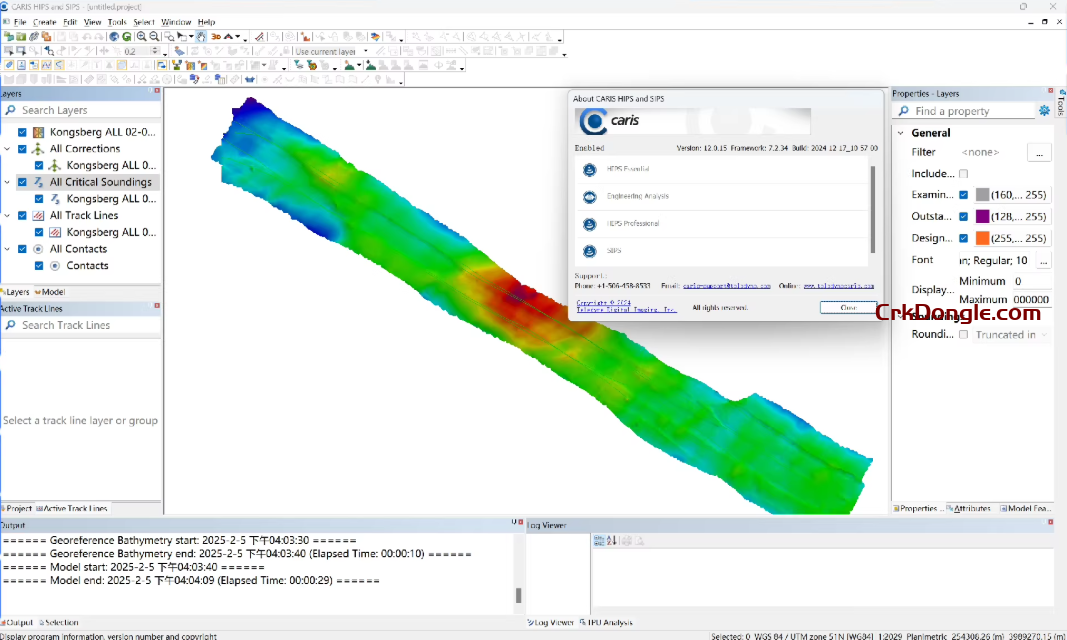
CARIS HIPS&SIPS Multi-beam Side Scan Sonar Post-processing Software CARIS HIPS and SIPS is a comprehensive hydrographic processing software suite. For over a decade, CARIS HIPS and SIPS have been leading software in the field of marine hydrographic processing and surveying, capable of meeting most surveying needs. Regardless of the application, its reliability and practicality remain absolutely stable when processing data from echo sounders and side scan sonars. Generally, you can choose CARIS HIPS to process large-scale bathymetric data and CARIS SIPS to process side scan sonar and multibeam-acquired image data. Key Features and Improvements in HIPS and SIPS 12.1.0 Subset Corrections Enhancements: Introduces a new Automatic-Corrections feature for faster and more versatile processing. Updated Subset Corrections with tabs for manual...
hyperMILL 2025 is the latest version of the CAD/CAM software suite from OPEN MIND Technologies, designed for advanced manufacturing in industries like aerospace, automotive, and precision engineering. It offers enhanced features for 2.5D, 3D, 5-axis, and mill/turn machining, focusing on efficiency, precision, and ease of use. Key highlights include: Automatic Deburring: Three new strategies for deburring holes and edges directly on the machine, with 3-axis mode included in the hyperMILL 3D package and an optional 5-axis mode for complex geometries. The CAM Plan function automatically recognizes holes and marks sharp edges, simplifying toolpath generation. 5-Axis Toolpath Optimization: A new automatic tool orientation mode pre-analyzes toolpaths to calculate efficient simultaneous and indexed movements, reducing programming time for complex parts. The 5-axis...
VirtualLab Fusion The Multiscale Optical Simulation and Design Platform VirtualLab Fusion is a unique optical design software designed for multiscale optics simulations. It integrates a wide range of simulation models for all types of optical components, both large and small, seamlessly combining them on a single software platform. With its ability to use the most appropriate solver for each component, VirtualLab Fusion ensures fast simulations while continuously tracking the full electromagnetic field and accurately accounting for diffraction and interference effects. Components such as nanostructures, metalenses, gratings, mirrors, and lenses, along with their simulation models, are fully integrated into one user-friendly interface. Thanks to its non-sequential methodology, VirtualLab Fusion simplifies even the most complex optical design tasks, making it the ideal choice...
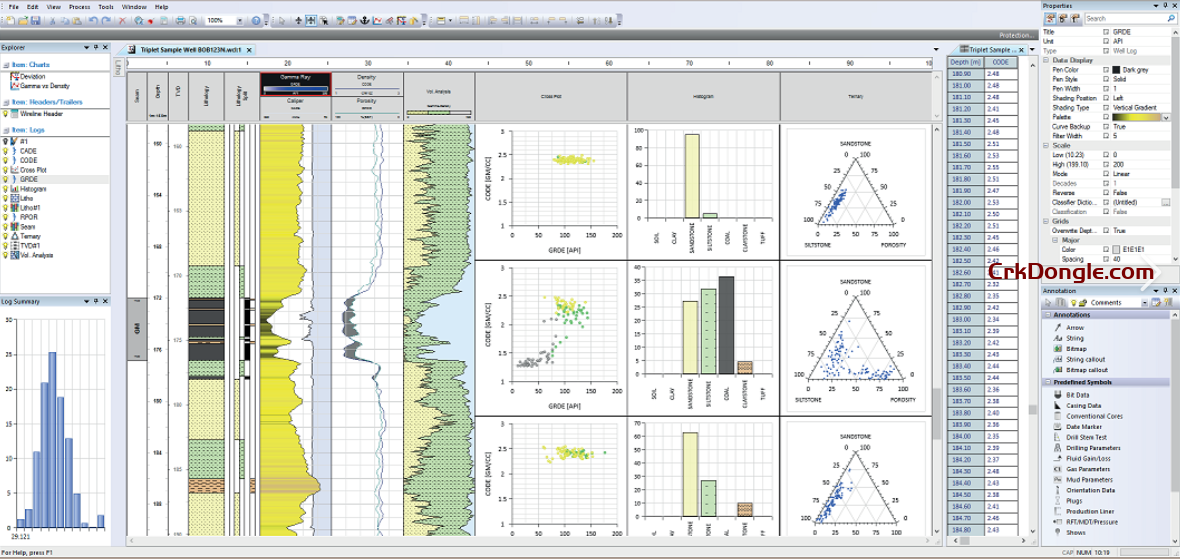
WellCAD 5.8 is a Windows-based software by Advanced Logic Technology (ALT) for processing and visualizing borehole geophysical and geological data, widely used in mining, oil and gas, and geotechnical industries. Key features include: New Features: Enhanced fracture topology analysis, integrated header editor (replacing standalone HeadCAD), new chart types (e.g., pie charts, improved Rose diagrams), advanced depth matcher with undo/redo/reset, and improved S-wave picking with kurtosis-based algorithms. Visualization: Supports dynamic charts, hyperlinks in headers, and displays for logs, curves, images, and statistical diagrams (e.g., polar, cross-plots). Data Handling: Imports ASCII, Excel, LAS, and image files (BMP, TIF, JPG, PNG); offers depth management (measured depth, TVD, time); and includes tools for data editing, filtering, and interpolation.
GEOVIA Surpac 2025 provides mining companies with the powerful, reliable, and customizable 3D mine planning and geological modelling software they need to deliver advanced drillhole-data management, perform rigorous statistical and geostatistical analyses, and develop comprehensive resource models, mine designs, and mine plans for either open pit or underground operations. With Surpac, geologists can quantify and evaluate the physical characteristics of a deposit, even with limited information. Engineers can visualize mine designs and plans that maximize ore recovery while complying with project constraints. Mine production teams can integrate vast amounts of data to determine the best way to extract reserves. GEOVIA Block Modeler Analyze the spatial variability of earth characteristics and create regularized volumetric models of the combined set of characteristics....
PVsyst 8.0.13_Design and simulation software Define your project System design: Rapidly design grid-connected, standalone, or pumping photovoltaic systems. The program guides you in selecting components for sizing your project. System sizing: Visualize sizing constraints for modules and inverters, including I/V curves and power distribution, focusing on optimal inverter sizing and comprehensive loss analysis. New orientations: Benefit from flexibility in project customization by defining unlimited orientations and explore the possibility of combining trackers and fixed plans in a single simulation. Simulation and results: Calculate annual energy distribution, analyse key metrics such as total energy, yield, and specific energy, through detailed reports on gains and losses. Near shadings: Model your 3D scene directly or import it from another CAD tool. Fast design...
Leica HxMap 4.7.1, high-performance post-processing workflow for airborne sensor data, features intuitive interface and industry’s fastest data throughput. The increased need for up-to-date geospatial information in many of the traditional applications as well as in emerging areas such as navigation or location-based apps requires a new approach to data processing: rapid updates over large areas in the shortest possible time. To be a true No 1, the world’s most efficient airborne sensors still rely on an efficient and fast data processing workflow. By introducing HxMap, the unified high-performance multi-sensor workflow platform, Leica Geosystems offers exactly what the industry has been waiting for: a fast, intuitive and efficient post-processing platform, that allows you to produce all known data products within one single interface. The Leica HxMap 4.7.1 common sensor post-processing platform offers the following modules to meet...
Leapfrog Geo 2025_3D modelling and visualisation for mining Build well-informed and dynamically updatable geological models in a fraction of the time. Bypass time-consuming wireframing and rapidly generate, visualise, and maintain 3D implicit models that maximise the value your data. Accelerate geological modelling Implicit modelling lets you build geological models faster and more intuitively with workflows designed for geologists. Build more robust models Collate and integrate all your geoscience data, including drillhole data, structural data, points, polylines, and meshes, to generate reliable models and make informed decisions. Visualise and explain complexity Easily build and share 3D models that visually communicate complex information to stakeholders. Effortlessly update models with new data Effortlessly update models with new data Leapfrog Geo 2025 Dynamically update...