Latest Release Page 14
Overview of KAPPA Emeraude 5.6 KAPPA Emeraude 5.6 is a specialized software module within the KAPPA-Workstation platform, developed by KAPPA Engineering for advanced production logging (PL) interpretation and cased-hole log analysis in the oil and gas industry. Released around mid-2023 as a major update (v5.40), it focuses on handling complex well data from horizontal wells, distributed measurements, and high-resolution tools. This version enhances dynamic data analysis across scales, from high-frequency transient data to low-resolution production rates, supporting full-field history matching, formation testing, and well integrity assessments. It integrates seamlessly with other KAPPA tools like Saphir NL (pressure transient analysis) and Topaze NL (rate transient analysis), making it essential for petroleum engineers optimizing reservoir performance and production profiles. Key New Features...
Schlumberger Petrel 2024 delivers enhancements to geological and geophysical workflows, updates for reservoir engineering functionalities, a solution for Petrel 2024 delivers enhancements to geological and geophysical workflows, updates for reservoir engineering functionalities, a solution for mismatched well data related to certain Coordinate Reference Systems (CRS) of the Studio E&P knowledge environment, and various other enhancements. Petrel Platform and Petrotechnical Suite in DELFI Petrel Platform data is released into the DELFI data ecosystem – you can access it from within the DELFI native application and get all the benefits of working in the DELFI environment. Instant access to the latest software through personalized workspaces More efficient project management on the Petrel platform Cloud-enabled high-performance computing optimizes workflow execution Enhanced collaboration through...
Prinergy Evo 11 is the latest iteration of Kodak’s Prinergy Evo Workflow software, a scalable prepress automation solution designed for small to mid-sized commercial, publication, and packaging printers. Released as part of the broader Prinergy 11.0 platform launch in May 2025, it emphasizes enhanced rules-based automation (RBA), improved security, and seamless integration with tools like COLORFLOW and Virtual Proofing Software Plus (VPS+). This version builds on Evo 10 (from 2024) by optimizing workflows for digital, analog, and hybrid print production, helping users boost efficiency and profitability while addressing modern challenges like variable data and short runs. Key New Features Enhanced Rules-Based Automation (RBA): Streamlined automation for repetitive tasks, including dynamic job routing and error detection, reducing manual intervention and speeding...
Overview of PACKZ 11 PACKZ 11 is the latest dot release of PACKZ, a comprehensive prepress software developed by HYBRID Software for label and packaging printing. It builds on PACKZ 10 (released in June 2025) by introducing interactive tools and automation enhancements to streamline workflows for digital, flexo, and offset printing. This version emphasizes efficient handling of complex shapes, cost-effective layouts, and seamless integration with workstation automation via Pactions. Key New Features Packzimizer for Free Nesting: A new optional tool optimized for cartons, signs, and displays. It efficiently nests complex shapes into compact, practical layouts to maximize substrate utilization and reduce waste. This is particularly useful for optimizing material costs in packaging production. Enhanced Prepress Automation: Includes powerful interactive tools...
Geomagic Freeform Plus 2025.1 is a multi-representation, multi-purpose digital modeling and CAD system for producing manufacturable, highly-detailed objects that are intricate or organically shaped, such as toys, figurines, medical implants, fine art or other sculptural objects. This software offers a fast and cost-effective way for designers and modelers to create original models or modify and stylize scan data, and then output to additive manufacturing systems for prototyping or rapid manufacturing, prepare molds for milling, or send to downstream CAD or CAM systems. Two unique aspects of Freeform are integration with haptic 3D input devices and a robust voxel-based data model. The combination of these provides a unique capability to emulate the physical process of sculpting clay. The haptic 3D input...
Overview of NIS-Elements 5.4 NIS-Elements 5.4 is a legacy version of Nikon’s integrated microscopy software platform, developed by Laboratory Imaging (a Nikon subsidiary), for advanced image acquisition, analysis, and processing in research, clinical, industrial, and documentation applications. Released around 2020–2021 as part of the version 5.x series, it supports control of Nikon microscopes and third-party components, offering scalable packages from basic documentation (NIS-Elements D) to advanced research (NIS-Elements AR) and high-content screening (NIS-Elements HC). This version emphasizes flexible workflows, custom scripting, and compatibility with ND2 file formats, though it has been superseded by version 6.x for newer Windows 11 support and enhanced features like AI-driven analysis. Key Features Acquisition Controls: Supports widefield, confocal, super-resolution, and multiphoton imaging with automated timelapse,...

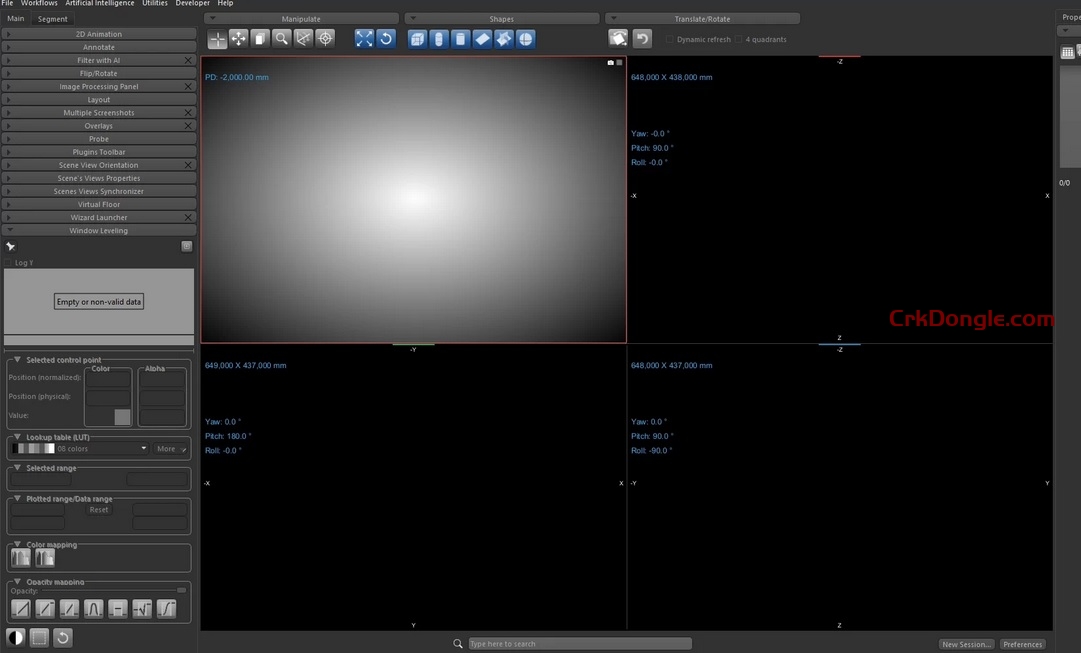
ORS Dragonfly 2025 (also referred to as Dragonfly 3D World 2025) is the latest iteration of Object Research Systems (ORS)’ flagship scientific image processing and analysis software. Designed for researchers, engineers, and scientists, it provides advanced tools for 2D/3D/4D imaging workflows, including segmentation, visualization, and quantitative analysis of data from sources like X-ray CT, SEM, FIB-SEM, confocal microscopy, and hyperspectral imaging. This release emphasizes AI-powered deep learning enhancements, community collaboration, and streamlined workflows to accelerate discoveries in fields such as materials science, biology, and engineering. Key Features Deep Learning Integration: Commercially supported engine for training and executing custom neural networks, enabling rapid segmentation and feature extraction (e.g., porosity analysis, fiber orientation, or object labeling). Image Processing Tools: Supports import of...
Dragonfly is the Premier Software Platform for Scientific Image Processing Powerful, flexible, and user-friendly, Dragonfly delivers quantitative answers for today’s most demanding 2D/3D/4D imaging studies, including data from correlative and hyperspectral imaging systems, X-ray, SEM, FIB-SEM, ion beam, and confocal microscopy, as well as other advanced applications. Features and Benefits Integrate data from multiple sources into a single environment. Gain detailed insight into material structures and properties with interactive inspection tools and robust quantification workflows. Post-processing functions that include data restructuring, filtering, volume and slice registration, image stitching. CT Reconstruction module for cone and parallel beam projections. Powerful segmentation tools to accurately label image features. Meet image enhancement and segmentation challenges with Dragonfly’s Deep Learning solutions. Share your findings with fully annotated...
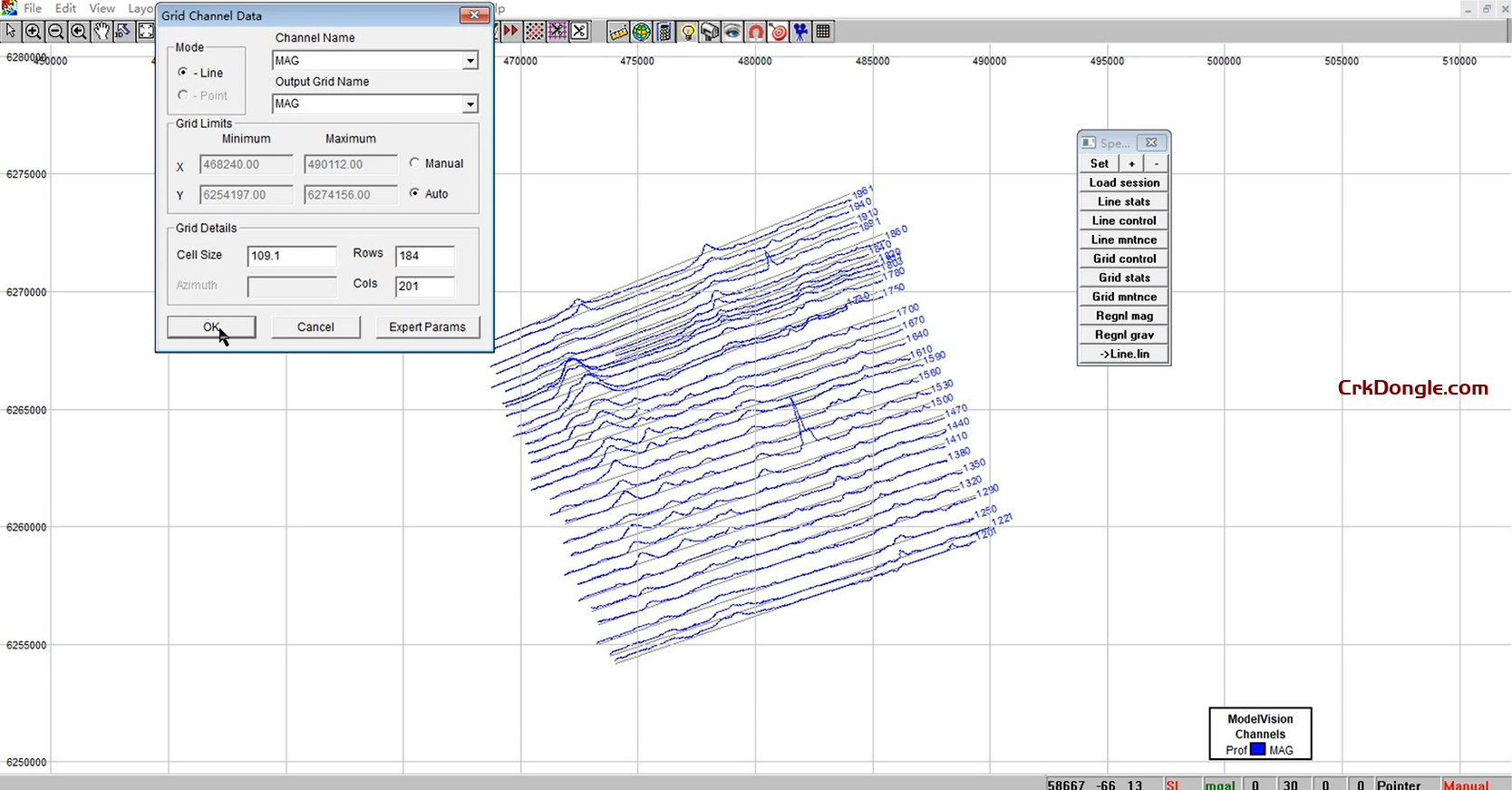
ModelVision 18, developed by Tensor Research, is an advanced 3D magnetic and gravity modeling software designed for geophysical and potential field exploration. It is widely used in mineral exploration, diamond exploration, petroleum exploration, environmental geophysics, engineering, unexploded ordnance (UXO), and underground hazard assessment. The software provides a comprehensive interpretation environment, enabling geophysicists to visualize, analyze, model, and invert potential field data with high precision. Below is a detailed overview based on available information. Key Features of ModelVision 18: 2D/3D Modeling: Supports both 2D and 3D modeling of magnetic and gravity data, allowing for detailed subsurface interpretation. 3D Geology Inversion: Uses advanced inversion techniques to derive geological structures from potential field data, including full tensor modeling for next-generation magnetometers. Mapping and...
Honeywell UniSim Design Suite R500 is a comprehensive process simulation and modeling software platform designed for engineers in industries such as oil and gas, refining, petrochemicals, and chemicals. It enables the creation of both steady-state and dynamic models for plant design, optimization, safety studies, operations monitoring, debottlenecking, digital twins, and business planning—all within a unified environment. This release (R500) builds on the UniSim EvOlution platform, offering improved performance for on- and offline applications, making it easier to capture process experience, enhance plant profitability, and maximize return on simulation investments. Key Features Steady-State and Dynamic Modeling: Supports rigorous simulations for process design and optimization under the same interface, dramatically improving workflow efficiency. Advanced Solvers: Includes the proprietary NOVA solver via UniSim...
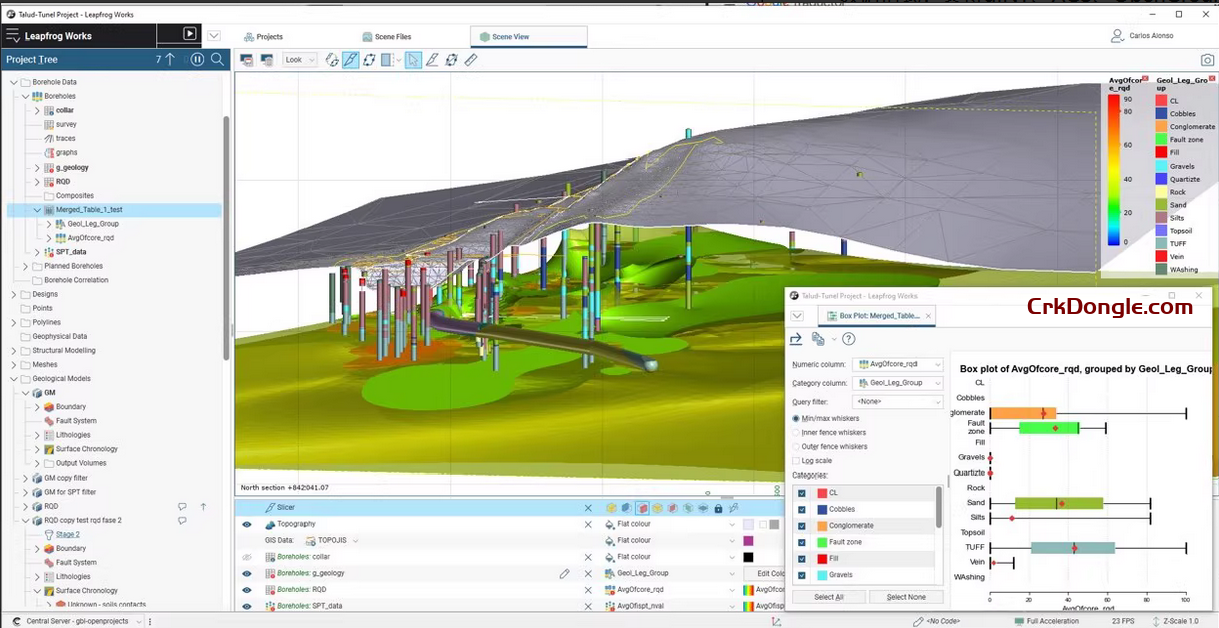
Leapfrog Works 2025 is a 3D geological modeling software developed by Seequent, specifically designed for civil engineering, environmental projects, and groundwater management. It helps users make more informed decisions in infrastructure construction, environmental assessment, and geological risk management. The following is a brief introduction to Leapfrog Works 2025: Core Features and Benefits 1 Dynamic 3D Geological Modeling: • Utilizes FastRBF™ (Fast Radial Basis Functions) technology to quickly build 3D geological models from borehole data, geophysical data, historical maps, and cross-sections, reducing manual modeling time. • Supports dynamic updates, so when new data is input, the model and outputs (such as cross-sections) automatically update without the need for reconstruction, saving time and costs. 2 Multi-disciplinary Data Integration: • Supports multiple industry-standard...
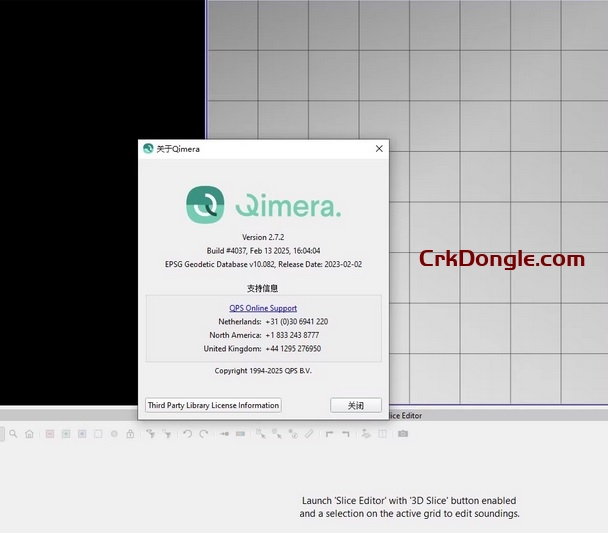
Overview of QPS Qimera v2.7.1 Qimera v2.7.1 is a minor maintenance release in the Qimera 2.7 series from QPS (Quality Positioning Services), a leading hydrographic software for processing, editing, and visualizing multibeam sonar and LiDAR data. This version focuses on bug fixes, performance tweaks, and minor enhancements to improve workflow efficiency for surveyors, oceanographers, and marine engineers. It builds on the core strengths of Qimera, such as its dynamic surface generation, variable-resolution gridding, and seamless integration with QPS’s ecosystem (e.g., QINSy for acquisition and Fledermaus for 4D visualization). Released as part of the ongoing 2.7 updates in 2025, it addresses issues from prior patches while maintaining compatibility with large datasets from systems like Kongsberg EM-series. Qimera excels in real-time data...
Overview of Bladed V4.8 Bladed V4.8 is a major release of DNV’s (formerly DNV GL) Bladed wind turbine design and analysis software, introduced in 2016 as a transformative update to enhance functionality, user experience, and computational efficiency for wind turbine manufacturers, certification agencies, design consultants, and research organizations. This version builds on Bladed’s legacy as the industry-standard tool for onshore and offshore wind turbine modeling, validated against real-world data from diverse turbines. It supports comprehensive aeroelastic simulations, structural dynamics, and certification workflows, enabling users to optimize designs, reduce loads, and ensure compliance with standards like IEC 61400. At the time of release, Bladed was already the primary simulation tool for about half of global utility-scale wind turbines, and V4.8...
Overview of WormLab 2024.1 WormLab 2024.1 is a minor update to the WormLab 2024 software suite from MBF Bioscience, a comprehensive hardware and software solution for imaging, tracking, and quantitative behavioral analysis of Caenorhabditis elegans (C. elegans) and other nematodes. This version builds on the patented worm-tracking technology to enable fully automated characterization of behaviors like crawling, swimming, thrashing, omega bends, coiling, and self-overlap. It’s designed for neurobiology, genetics, and pharmacology research, allowing researchers to process large datasets efficiently and extract metrics such as speed, direction, distance traveled, posture changes, and sinusoidal movement amplitude. The 2024 release emphasizes improved handling of larger video sequences and enhanced flexibility, particularly for Mac users, making it suitable for high-throughput assays in academic and...
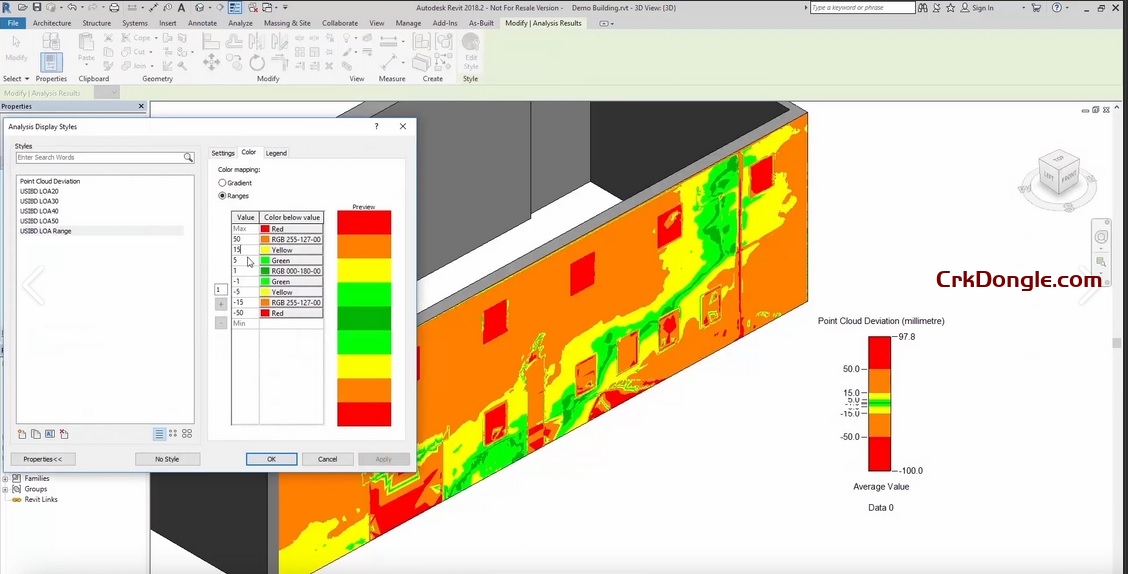
Overview of FARO As-Built 2025 for Revit FARO As-Built for AUTOdesk Revit is a specialized software plugin designed for architects, engineers, and general contractors working with 3D laser scan data in BIM (Building Information Modeling) workflows. It enables quick and precise analysis, modeling, alignment, editing, and extraction of point cloud data directly within the Revit environment, facilitating accurate as-built documentation for building redesign, maintenance, or enhancement projects. This helps reduce rework, cost overruns, and ensures designs align with real-world site conditions. The 2025 version (specifically v2025.0, released on June 27, 2025) integrates seamlessly with the Revit user interface and supports large point cloud datasets, making it ideal for converting scan data into native Revit objects and BIM models. Key Features...
FARO As-Built Modeler 2023 – What’s New – June 2023 As part of FARO’s continuing commitment to deliver reliable and professional quality software, this new version 2023.0 of FARO As-Built Modeler includes a series of enhancements, improvements as well as fixes that address customer-reported issues. This article provides a detailed description of each enhancement, enabling you to get started quickly. New Features Supports the new FARO Flash Scans captured by the FARO Focus Scanner. You can now use this type of scans for your work to derive models from scan data. License management made easier for users. Starting from version 2023, As-Built Modeler comes with a changed license activation and management process. Make sure to read article License Activation and...